the last days of Narnia
Shift’s Control of Puzzle
In the far west of [Narnia](entity:location-recall-location-narnia-396f2630d802), the old monkey Shifu and the donkey [Puzzle](entity:character-recall-character-puzzle-5bdbd79cbc2a) live together. Shifu calls Puzzle a friend, but makes him fetch water and gather supplies, and takes the best food for himself. Whenever Puzzle hesitates, Shifu uses his own cleverness as an
early in the year, in spring
The Lionskin in Caldron Pool
Walking beside the deep pool below the great waterfall, Schiff noticed a yellow object in the fast-moving water and ordered [Puzzle](entity:character-recall-character-puzzle-5bdbd79cbc2a) to retrieve it. Puzzle suggested that Schiff should do it himself, but Schiff pretended to be offended and said that he was weak in the chest, causing the donkey to apologize and then
later that spring day
Shift Dresses Puzzle as Aslan
Cuff ignores [Puzzle](entity:character-recall-character-puzzle-5bdbd79cbc2a)'s objection and sends him to Chipping Sodbury for a tedious errand. After Puzzle leaves alone, Cuff cuts and sews a lion's skin, making it into a coat suitable for a donkey, and attaches a lion's head to a hood. He also
that evening
The False Aslan Plan
[Puzzle](entity:character-recall-character-puzzle-5bdbd79cbc2a) retreated when he heard that he would have to impersonate [Aslan](entity:character-recall-character-aslan-f00e3dfd5571), but Schiff insisted that this plan is said to restore order in [Narnia](entity:location-recall-location-narnia-396f2630d802) and get everyday items like sugar. Puzzle warned that real Aslan might appear and expose them
about three weeks later
Tirian Hears Aslan Has Returned
[Tirian](entity:character-recall-character-tirian-541e581d89f0) and his closest friend, the unicorn J, rested in the hunting cabin, hoping to hear more news about the return of [Aslan](entity:character-recall-character-aslan-f00e3dfd5571). Birds, squirrels, a male deer, a Calormene merchant, and a hedgehog all brought word of this, but none brought concrete
the same morning
Roonwit Rejects the Rumor
Runevit told Tiran that the stars foretold disaster, not the return of [Aslan](entity:character-recall-character-aslan-f00e3dfd5571); he also said that if Aslan were truly to come, the celestial phenomena would have already announced it. Tiran angrily countered that no one would lie about Aslan; Javert replied that
the same morning
The Felling of Lantern Waste
A sycamore tree spirit cried out in sorrow, coming to seek justice, saying that the workers were cutting down the talking tree in Tengnaya. She had not finished speaking when she fell and disappeared: the distant tree that had been felled crushed her
immediately after the Dryad’s death
Tirian Sends for Reinforcements
[Tirian](entity:character-recall-character-tirian-541e581d89f0) would not delay in pursuing, but ordered Ruhnwert to ride to Kelparavell. Ruhnwert accepted the order and galloped eastward. Tirian and Jevell went upstream along the river, furious, not thinking at all about the danger of facing an
later that morning
The Calormene Timber Raft
[Tirian](entity:character-recall-character-tirian-541e581d89f0) and Jemima found a raft carrying freshly felled trees drifting down the River [Narnia](entity:location-recall-location-narnia-396f2630d802), steered by a water rat. They asked who had ordered the felling, and the water rat replied that it was [Aslan](entity:character-recall-character-aslan-f00e3dfd5571) himself who had ordered it, and the wood was to
shortly after the raft encounter
The King Sees Lantern Waste Destroyed
After walking west along the river, [Tirian](entity:character-recall-character-tirian-541e581d89f0) and Jemima arrived at Lune, where they saw a wide muddy path crossing through the ancient forest. Calormenes and Narnian workers were dragging felled trees away, while whips drove tired horses forward through the mud
during the encounter in Lantern Waste
Tirian and Jewel Kill the Loggers
[Tirian](entity:character-recall-character-tirian-541e581d89f0) saw two Calormene beat a struggling horse. At first, he thought it was just an ordinary dumb horse. The horse cried out that it had done its best, revealing that it was actually a free talking horse from [Narnia](entity:location-recall-location-narnia-396f2630d802). Tirian and Jemima were furious and
immediately after the killings
Tirian and Jewel Surrender
After escaping the crowd, Tiran condemned the ambush as a disgraceful murder, and Jerric felt equally ashamed. Because both the horse and the water rat said the order came from [Aslan](entity:character-recall-character-aslan-f00e3dfd5571), Tiran decided to surrender to the authorities and requested that Aslan personally judge him
that afternoon
Shift Appears as Aslan’s Mouthpiece
The prisoners were led to an open space where a monkey sat before a small stable, dressed in borrowed fine clothes and wearing a paper crown. This is Shif; he now claims to be the messenger of [Aslan](entity:character-recall-character-aslan-f00e3dfd5571), and Captain Calormene praises the false god [Tash](entity:character-recall-character-tash-d0e0acdfaf38) for allowing them to capture
the same afternoon
Shift Announces Forced Labor
Cuff announced that horses, cows, and donkeys would all be sent to [Calormen](entity:location-recall-location-calormen-91204da28e47) to serve labor, while animals skilled in digging and dwarves would be sent to the mines. He denied that this plan meant slavery, and claimed that the wages would be deposited into [Aslan](entity:character-recall-character-aslan-f00e3dfd5571)'s treasury for
the same afternoon
Tash and Aslan Declared One
A small sheep questioned the alliance with [Calormen](entity:location-recall-location-calormen-91204da28e47), asking how [Aslan](entity:character-recall-character-aslan-f00e3dfd5571) could be the same being as [Tash](entity:character-recall-character-tash-d0e0acdfaf38); Tash is the god who sacrifices human lives. Shu'f spat in the face of the small sheep, declaring that Tash and Aslan are just different names for the
after the assembly
Tirian Bound to the Tree
The Calormenes tied [Tirian](entity:character-recall-character-tirian-541e581d89f0) to an ash tree, leaving him bruised, thirsty, hungry, and unable to wipe blood from his face. He could hear [Shift](entity:character-recall-character-shift-5a6f1fd30139) continuing to address the crowd but could not make out the words.
The King’s helplessness contrasts with his earlier impulsive violence. While [the Ape](entity:character-recall-character-the-ape-aed7929d905f) consolidates power, the people who still care for Tirian must decide whether they can help him without defying what they believe is [Aslan](entity:character-recall-character-aslan-f00e3dfd5571)’s will.
that evening
The Small Beasts Feed Tirian
Mice, a rabbit, and moles came quietly to [Tirian](entity:character-recall-character-tirian-541e581d89f0) with wine, cheese, oatcakes, butter, and water. They washed his face and explained that they had stayed away because they feared [Aslan](entity:character-recall-character-aslan-f00e3dfd5571) would punish anyone who freed him.
The small creatures still loved their King but believed the false orders attributed to Aslan. Their kindness offered Tirian comfort while also showing how thoroughly the deception had confused even his loyal subjects.
later that night
The False Lion at the Stable
From the tree, [Tirian](entity:character-recall-character-tirian-541e581d89f0) watched [Shift](entity:character-recall-character-shift-5a6f1fd30139) lead the crowd to the stable and open its door. A yellow, stiff-moving figure emerged, and the beasts cried out to [Aslan](entity:character-recall-character-aslan-f00e3dfd5571) for comfort. Tirian could not identify it clearly, but the performance looked wrong and confirmed his suspicion that [the Ape](entity:character-recall-character-the-ape-aed7929d905f) was deceiving them.
Shift whispered to the figure as if taking instructions, then sent it back inside. The scene left the Narnians more frightened and dependent on Shift, who alone claimed to interpret the supposed Lion’s wishes.
before dawn
Tirian Calls Across Worlds
Alone in the darkness, [Tirian](entity:character-recall-character-tirian-541e581d89f0) remembered earlier Narnian crises and the children from another world who had helped save the country. He called on [Aslan](entity:character-recall-character-aslan-f00e3dfd5571), then cried out to the [Friends of Narnia](entity:organization-recall-organization-friends-of-narni-3e01d4545219), asking them to cross worlds and come to his aid.
His call carried him into a vivid vision of seven people gathered at supper. They saw him as a ghost, and [Peter](entity:character-recall-character-peter-22e18a2305ec) demanded that he speak in Aslan’s name, but Tirian could make no sound before the vision faded.
just before sunrise, after the vision
Jill and Eustace Arrive
Two children suddenly appeared before [Tirian](entity:character-recall-character-tirian-541e581d89f0): [Jill Pole](entity:character-recall-character-jill-pole-1fd58dfe424f) and [Eustace Scrubb](entity:character-recall-character-eustace-scrubb-d478eb0f8fe9), whom he recognized from the old tales. Eustace cut his bonds, and Jill apologized that they had taken so long; in their world, nearly a week had passed since Tirian’s vision.
Tirian led them away from the enemy through rough ground and water to hide their trail. Their arrival turned his desperate appeal into practical help and revived his belief that [Aslan](entity:character-recall-character-aslan-f00e3dfd5571) had not abandoned [Narnia](entity:location-recall-location-narnia-396f2630d802).
the morning after Tirian’s capture
The Children Explain Their Return
As they traveled, Jill and Eustace explained that the Professor and Aunt Polly had gathered the [Friends of Narnia](entity:organization-recall-organization-friends-of-narni-3e01d4545219) because they sensed that help was needed. [Peter](entity:character-recall-character-peter-22e18a2305ec) and [Edmund](entity:character-recall-character-edmund-65943bc9e68f) had retrieved the [Magic Rings](entity:object-recall-object-magic-rings-ebe2a5277796) from a London garden, hoping the children could use them to reach [Narnia](entity:location-recall-location-narnia-396f2630d802).
Before the Rings could be handed over, a violent jerk in the train brought Jill and Eustace directly into Narnia. They had not used the Rings: [Aslan](entity:character-recall-character-aslan-f00e3dfd5571) had brought them across in his own way.
later that morning
Tirian’s Tower Refuge
[Tirian](entity:character-recall-character-tirian-541e581d89f0) guided Jill and Eustace to an old border tower stocked with weapons, armor, provisions, and disguises. He showed them Calormene mail and a stain that could darken their skin, and the group prepared to pass among the enemy without being recognized.
The tower gave the King a temporary refuge and the means to organize a rescue. Jill and Eustace also showed that their earlier Narnian adventures had given them useful skills in archery, survival, and travel.
the afternoon before their first night raid
The Plan to Rescue Jewel
After giving the children food and training them in archery and swordplay, [Tirian](entity:character-recall-character-tirian-541e581d89f0) agreed that their first objective should be to rescue [Jewel](entity:character-recall-character-jewel-c969623d7079) from the stable. If they succeeded, they would try to reach [Roonwit](entity:character-recall-character-roonwit-c640bd4179b7)’s relief force coming from [Cair Paravel](entity:location-recall-location-cair-paravel-048f6e9db882).
Tirian’s plan combined a direct rescue with the hope of exposing the false [Aslan](entity:character-recall-character-aslan-f00e3dfd5571). He also insisted on disciplined withdrawal if the operation went wrong, wary of turning courage into needless disaster.
that night
The Night Approach to Stable Hill
[Tirian](entity:character-recall-character-tirian-541e581d89f0), Jill, and Eustace crossed the dark woods toward [Stable Hill](entity:location-recall-location-e609c1c50f99) under the stars. The silence of [Narnia](entity:location-recall-location-narnia-396f2630d802), stripped of its usual nocturnal calls and music, suggested that fear had spread beyond the clearing.
Jill’s knowledge of the stars and her skill at moving silently made her the best pathfinder. From cover, she spotted a poorly watchful Calormene sentry near the stable, allowing Tirian to approach without alerting the camp.
later that night
Jewel Freed from Captivity
[Tirian](entity:character-recall-character-tirian-541e581d89f0) seized the sentry, forced him to reveal [Jewel](entity:character-recall-character-jewel-c969623d7079)’s location, and led him behind the stable at dagger point. Jewel stood hobbled and tied to a ring in the wall; Tirian cut him loose and bound the guard in his place.
Tirian and Jewel reunited with deep relief, but when they returned to the hiding place Jill was missing. The rescue had succeeded, yet the King’s party was suddenly exposed to new dangers without knowing where she had gone.
moments after Jewel’s rescue
Jill Rescues Puzzle
A distant drum and approaching hoofbeats raised fears of an enemy patrol. Jill then reappeared, laughing as she explained that she had slipped into the stable and found only [Puzzle](entity:character-recall-character-puzzle-5bdbd79cbc2a) wearing the lionskin.
She had drawn her knife and brought him out, though he had been eager to escape his confinement. The group now possessed direct proof that [Shift](entity:character-recall-character-shift-5a6f1fd30139)’s [Aslan](entity:character-recall-character-aslan-f00e3dfd5571) was an imposture, and [Tirian](entity:character-recall-character-tirian-541e581d89f0) spared Puzzle when Jill defended him as a victim of [the Ape](entity:character-recall-character-the-ape-aed7929d905f)’s manipulation.
during the return from Stable Hill
Tirian Reveals the Deception
[Tirian](entity:character-recall-character-tirian-541e581d89f0) abandoned secrecy and took [Puzzle](entity:character-recall-character-puzzle-5bdbd79cbc2a), still dressed in the lionskin, toward a column of Dwarfs being marched to the mines. He announced that [the Ape](entity:character-recall-character-the-ape-aed7929d905f)’s [Aslan](entity:character-recall-character-aslan-f00e3dfd5571) was false and showed them the donkey beneath the costume.
The disguise was disheveled, and Puzzle’s face made the fraud unmistakable. Tirian expected [the Dwarfs](entity:character-recall-character-the-dwarfs-0b84257ab9fa) to turn against [Shift](entity:character-recall-character-shift-5a6f1fd30139) and join the resistance, but the revelation did not produce the response he had hoped for.
that night
The Dwarfs Reject Liberation
[Tirian](entity:character-recall-character-tirian-541e581d89f0) and Eustace killed the two Calormene guards, and [the Dwarfs](entity:character-recall-character-the-dwarfs-0b84257ab9fa) were free to return to their homes rather than the mines. Yet the majority refused to celebrate or accept Tirian’s account, convinced they had already been deceived once and would not believe another claim about [Aslan](entity:character-recall-character-aslan-f00e3dfd5571).
Their leader, [Griffle](entity:character-recall-character-griffle-99e0f01447da), declared that the Dwarfs would look after themselves and trust no king, lion, or story from another world. [Poggin](entity:character-recall-character-poggin-6aeee0ccd4d7) alone slipped away to join Tirian’s side, offering the resistance a small but welcome ally.
the night before Poggin’s account
Ginger and Rishda’s Secret Pact
At the tower, [Poggin](entity:character-recall-character-poggin-6aeee0ccd4d7) reported that [Ginger](entity:character-recall-character-ginger-7a5f4669310e) had spread a story claiming [Aslan](entity:character-recall-character-aslan-f00e3dfd5571) had swallowed [Tirian](entity:character-recall-character-tirian-541e581d89f0) for cursing him. The lie made the King’s escape seem like further proof of the Lion’s anger and made the frightened Narnians more obedient to [Shift](entity:character-recall-character-shift-5a6f1fd30139).
Poggin had also overheard Ginger and [Rishda Tarkaan](entity:character-recall-character-rishda-tarkaan-444e4ed1f516) admitting that neither believed in Aslan or [Tash](entity:character-recall-character-tash-d0e0acdfaf38). They intended to use Shift while quietly recruiting self-interested Narnians who would accept [Narnia](entity:location-recall-location-narnia-396f2630d802)’s conversion into a Calormene province.
the morning after Poggin’s report
Tash Appears in the Woods
As the resistance discussed its next move, the air turned cold and foul. A translucent, bird-headed being with four arms glided through the trees, withered the grass beneath it, and vanished northward.
[Tirian](entity:character-recall-character-tirian-541e581d89f0) recognized the form from the temple of [Tash](entity:character-recall-character-tash-d0e0acdfaf38) in [Tashbaan](entity:location-recall-location-2bc5c1b707ee). The sight confirmed that Tash was real, despite Rishda’s disbelief, and that the conspiracy had called a dangerous power into [Narnia](entity:location-recall-location-narnia-396f2630d802).
later that morning
The Resistance Chooses a Retreat
The group discussed whether to immediately return to Stable Mountain to expose [Puzzle](entity:character-recall-character-puzzle-5bdbd79cbc2a) or go to find Lunevitt arriving. The dwarf refused to accept their warning, and [Tash](entity:character-recall-character-tash-d0e0acdfaf38) is now roaming around [Narnia](entity:location-recall-location-narnia-396f2630d802), so they judged a direct confrontation too risky
the following afternoon
Farsight Brings the News
People walked through the bright spring scenery. Jill and Javell talked about the long peace in [Narnia](entity:location-recall-location-narnia-396f2630d802) and the hope that ordinary life might be restored again. Their conversation was interrupted by an eagle flying overhead. The news fell: Kelparavell had been captured by the Calormene
immediately after Farsight’s report
Tirian Accepts the Final Battle
[Tirian](entity:character-recall-character-tirian-541e581d89f0) determined that [Narnia](entity:location-recall-location-narnia-396f2630d802) had fallen into the hands of the Calormenes. Jeril argued that the remaining friends should return to the [Stable Hill](entity:location-recall-location-e609c1c50f99), expose the deception, and face the fate awaiting them, rather than attempt to escape—escape would not save this land. At first
the evening after Farsight’s arrival
The Return to Stable Hill
A group of people approached the stable mountain carefully, hiding behind the shelter behind the stable at sunset. They waited for several hours in the cold, thirsty and tense, until the sound of a gong announced the start of the Shiff midnight gathering
that night, during the gathering
Shift Accuses Puzzle
C sift told the gathered Narnians that there was a wicked donkey wearing a lion's skin, pretending to be [Aslan](entity:character-recall-character-aslan-f00e3dfd5571). He took for granted that the fact that [Puzzle](entity:character-recall-character-puzzle-5bdbd79cbc2a) had indeed passed through the disguise was evidence to support the lie that there was still a real "[Tashlan](entity:concept-recall-concept-tashlan-463bbf9f2fbc)" in
later during the same gathering
The Narnians Refuse the Stable
Shif claimed that anyone could see [Tashlan](entity:concept-recall-concept-tashlan-463bbf9f2fbc) as long as they walked into the stable, but only one could enter at a time. This proposal turned the crowd's desire to see [Aslan](entity:character-recall-character-aslan-f00e3dfd5571) into fear: they worried they would be swallowed, burned, or killed, so no one volunteered. Jin
a few moments later
Ginger Enters the Stable
Jin Jie walked into the dark stable, then emitted a piercing cry, his fur standing on end, his eyes wide open with fear. When Rishda ordered him to speak, the cat could only make the sounds of a common animal, as if it had lost the ability to speak
immediately after Ginger’s return
Emeth Demands Entry
young officer of calamity emes insists on entering the stable, because someone told him that tash and aslan are the same being. risda tries to stop him, but emes demands to know whether the monkey's words are true. shif swears that it is true. em
moments after Emeth enters
The Boar Faces the Calormenes
A shadow in calame armor stepped out from the stable and fell. Rishad claimed it was Emes, saying he had died after seeing [Tash](entity:character-recall-character-tash-d0e0acdfaf38), but Tiran and his companion could tell the corpse was actually an older man. Then Shif ordered the boar in. When the cal
later that night
Tirian Leads the Counterattack
[Tirian](entity:character-recall-character-tirian-541e581d89f0) and his companions walked into the firelight, declaring [Tash](entity:character-recall-character-tash-d0e0acdfaf38) a demon, Shu a traitor, and the Calormenes enemies of [Narnia](entity:location-recall-location-narnia-396f2630d802). He called upon true Narnians to join him, lest they be one after another killed or enslaved
at the start of the counterattack
Shift Is Taken by Tash
Stables shook, when strange light blazed, [Tash](entity:character-recall-character-tash-d0e0acdfaf38) appeared, as if he had caught Shif. The crowd's voices clearly indicated that the being called "[Tashlan](entity:concept-recall-concept-tashlan-463bbf9f2fbc)" was not under the control of the monkeys. The Calormenes and Narnians both fled in fear. R
during the opening moments of the battle
The Talking Dogs Join Tirian
fifteen speaking dogs ran happily to tirian's side, licking the king and his companions, and greeting them warmly. mice, moles, squirrels, bears, and wild pigs followed, bringing the resistance the first significant number of supporters. many other narnians stayed in place because they
that night, shortly after Tirian’s challenge
The First Battle at Stable Hill
Rishda ordered the soldiers to seize Tiriyan and his group, and push them into the stable. Gil shot down a Kalemone and a sheep demon before the enemies reached the front line; at the same time, Tiriyan's side fought close combat with dogs, unicorns
during the pause after the first attack
The Dwarfs Reject Tirian Again
[Tirian](entity:character-recall-character-tirian-541e581d89f0) implored the dwarves of Grifell to join the defense, but they mocked him, reiterating that they neither wanted the king nor [Aslan](entity:character-recall-character-aslan-f00e3dfd5571). They also refused to fight for the Calormenes, wanting to remain neutral and let both sides weaken each other. Their
as the Calormene reinforcements approached
The Dwarfs Kill the Horses
After saving a talking horse, the small animals rushed up the hill, but were shot by the dwarves of Grifell before reaching Tiriann. The attackers had previously mistakenly believed that the dwarves refused to join the Calormenes, meaning they might provide assistance
moments after the horses are killed
The Calormenes Reinforce
A second drum answered Rishda’s signal, announcing still more Calormenes. [Tirian](entity:character-recall-character-tirian-541e581d89f0) understood that the defenders had to act before the additional force arrived, and he ordered an assault designed to drive the first troops away from the stable.
Jill and [Farsight](entity:character-recall-character-farsight-2cac936a3a44) attacked from opposite sides while Tirian, [Jewel](entity:character-recall-character-jewel-c969623d7079), and the others charged. Their coordinated strike initially cut into the enemy line, but new spearmen appeared faster than the defenders could reduce their numbers.
during the renewed fighting
Eustace Is Captured
The Calormenes overwhelmed the resistance with fresh troops and drove the fighters back toward the white rock. As the group turned to face the enemy, a soldier carried Eustace to the stable and threw him inside before [Tirian](entity:character-recall-character-tirian-541e581d89f0) or [Jewel](entity:character-recall-character-jewel-c969623d7079) could reach him.
The Dwarfs then began shooting at the Calormenes, not to rescue Eustace but to weaken both sides. The defenders were left to fight without one of their two human allies, while the stable became an even more immediate threat.
later in the same battle
The Dwarfs Are Captured
Rishda led most of his force against [the Dwarfs](entity:character-recall-character-the-dwarfs-0b84257ab9fa), whose archery and resistance could not withstand the better-equipped Calormenes. He returned with eleven captured Dwarfs and ordered them thrown into the stable as offerings to [Tash](entity:character-recall-character-tash-d0e0acdfaf38).
The surviving resistance watched the prisoners disappear through the dark doorway. Rishda’s public dedication of the captives to Tash also exposed the growing brutality of the war and left [Tirian](entity:character-recall-character-tirian-541e581d89f0)’s small group isolated.
near midnight
The Last Stand Begins
Rishda offered to spare the Boar, the Dogs, and [Jewel](entity:character-recall-character-jewel-c969623d7079) only if they submitted to imprisonment, servitude, and mutilation. They answered with growls, and he ordered his men to kill the animals while taking the children and [Tirian](entity:character-recall-character-tirian-541e581d89f0) alive.
The defenders faced a stronger force equipped with spears, which could strike a Boar or Unicorn before either could reach its enemy. Tirian’s party fought on despite the odds, with each member in danger of being separated and driven toward the stable.
during the final fighting
Tirian Drags Rishda Inside
As the battle carried [Tirian](entity:character-recall-character-tirian-541e581d89f0) toward the stable, he realized that the Calormenes had been steering him there deliberately. He dropped his sword, seized Rishda by the belt, and dragged the captain through the doorway, challenging him to meet [Tash](entity:character-recall-character-tash-d0e0acdfaf38) himself.
The door shut amid a deafening noise and blinding light. Inside, Tirian found himself in a brightly lit country rather than a cramped stable, while Rishda trembled before the real Tash, who appeared and claimed the Calormene as his lawful prey.
immediately after Tirian enters the stable
Aslan Sends Tash Away
[Tash](entity:character-recall-character-tash-d0e0acdfaf38) seized Rishda, but a calm voice ordered the monster to depart with its lawful prey in the name of [Aslan](entity:character-recall-character-aslan-f00e3dfd5571) and the Emperor-over-sea. Tash vanished with the Calormene, leaving [Tirian](entity:character-recall-character-tirian-541e581d89f0) face to face with the seven Kings and Queens who had appeared in the stable’s true interior.
Among them were [Peter](entity:character-recall-character-peter-22e18a2305ec), [Edmund](entity:character-recall-character-edmund-65943bc9e68f), [Lucy](entity:character-recall-character-lucy-680a57cd8fba), Jill, Eustace, Digory, and Polly, restored to the age and dignity of their Narnian days. Tirian, no longer bloodied or exhausted, greeted them as the rulers of a world he had thought lost.
soon after the Kings and Queens reunite
Susan Is Absent
[Tirian](entity:character-recall-character-tirian-541e581d89f0) asked why Susan was not among the assembled monarchs. [Peter](entity:character-recall-character-peter-22e18a2305ec) answered that she was no longer a friend of [Narnia](entity:location-recall-location-narnia-396f2630d802), and the others explained that she treated their adventures as childish games and cared instead about appearances and social invitations.
The exchange marks a painful separation within the Pevensie family. The reunion could not restore everyone to Narnia, and Susan’s estrangement remained unresolved as the company turned to the wonders around them.
moments after Tirian’s arrival
The Stable Opens into a New World
Beyond the stable door, the company stood beneath a summer sky among grass, trees, and extraordinary fruit. [Peter](entity:character-recall-character-peter-22e18a2305ec) explained that the small wooden door still opened back into the dark forest, though its interior was vast and radiant.
[Tirian](entity:character-recall-character-tirian-541e581d89f0) looked through a crack and saw the dying bonfire and the Calormenes outside. The stable’s inner and outer spaces were different realities, revealing that the apparent trap had been a threshold rather than an enclosed room.
during the first gathering in the new country
Lucy Describes the Stable’s Visitors
[Lucy](entity:character-recall-character-lucy-680a57cd8fba) described how [Tash](entity:character-recall-character-tash-d0e0acdfaf38) had appeared beside the door when [Ginger](entity:character-recall-character-ginger-7a5f4669310e) entered and how a Calormene sentry had killed another man who came through. She explained that [Emeth](entity:character-recall-character-emeth-d60e814a8e24) had fought the sentry and then wandered into the bright country seeking Tash.
After Emeth, [Shift](entity:character-recall-character-shift-5a6f1fd30139) and [the Dwarfs](entity:character-recall-character-the-dwarfs-0b84257ab9fa) had entered, followed by Jill, Eustace, and [Tirian](entity:character-recall-character-tirian-541e581d89f0). The account clarified the stable’s deadly deception while establishing that its interior received those who crossed the threshold alive.
shortly after Lucy’s account
The Dwarfs Deny the New Country
[Lucy](entity:character-recall-character-lucy-680a57cd8fba) and [Tirian](entity:character-recall-character-tirian-541e581d89f0) approached [the Dwarfs](entity:character-recall-character-the-dwarfs-0b84257ab9fa), who sat packed in a circle insisting that they were still in a dark, cramped stable. They rejected the visible sky, flowers, and fruit as tricks, even when Lucy tried to prove the truth with a bunch of violets.
Diggle accused Tirian of inventing another lie. The Dwarfs’ refusal to trust any evidence had become a prison of their own making, and physical proof could not persuade them to look beyond their suspicion.
moments after the Dwarfs reject Lucy
Aslan Welcomes the Last King
The earth trembled and [Aslan](entity:character-recall-character-aslan-f00e3dfd5571) appeared. [Tirian](entity:character-recall-character-tirian-541e581d89f0), overcome by the sight of the Lion he had defended without ever seeing, knelt at his feet; Aslan kissed him and praised the last King of [Narnia](entity:location-recall-location-narnia-396f2630d802) for standing firm at the darkest hour.
[Lucy](entity:character-recall-character-lucy-680a57cd8fba) asked whether Aslan could help [the Dwarfs](entity:character-recall-character-the-dwarfs-0b84257ab9fa). He answered that he would show her what he could and could not do, making their fate a test of whether they would accept help rather than merely a question of what help was offered.
immediately after Aslan’s arrival
The Dwarfs Reject Aslan’s Feast
[Aslan](entity:character-recall-character-aslan-f00e3dfd5571) made a lavish feast appear in [the Dwarfs](entity:character-recall-character-the-dwarfs-0b84257ab9fa)’ laps, but they insisted that they were eating stable scraps and drinking dirty trough water. Suspicious that their companions had received better portions, they grabbed at one another’s food and turned the feast into a brawl.
They ended by congratulating themselves for refusing to be fooled. Aslan explained that their prison lay in their minds: their fear of deception had made them unwilling to receive what was real.
after the Dwarfs reject the feast
The Door Opens at the End
[Aslan](entity:character-recall-character-aslan-f00e3dfd5571) roared that the time had come, and the stable door opened onto the dark, dying world of [Narnia](entity:location-recall-location-narnia-396f2630d802). A giant shape rose beyond the northern moors, and Aslan explained that the sleeping figure once called Time had awakened into a new name.
At the giant’s horn call, the stars began to fall from the sky. The world’s end had begun, and the company watched from the threshold as the heavens themselves answered Aslan’s command.
during the final night of Narnia
The Stars Return to Their Maker
The stars fell in brilliant showers, each appearing as a living figure with silver hair and a spear of white-hot light. They gathered behind [Aslan](entity:character-recall-character-aslan-f00e3dfd5571)’s company, illuminating the forests and the vast shadows of the final scene.
As the starless darkness spread overhead, the dying world’s creatures began to flee toward the open door. The stars’ return made visible that the end of [Narnia](entity:location-recall-location-narnia-396f2630d802) was not merely a battle’s conclusion but the closing of an entire world.
as the stars finish falling
The Creatures Face Judgment
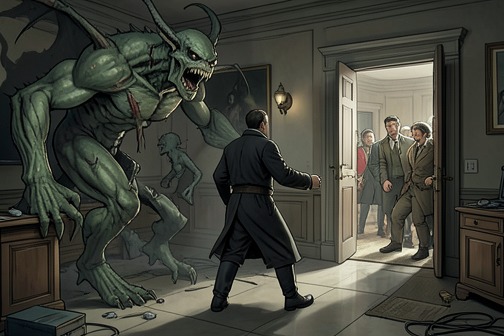
[Dragons](entity:creature-recall-creature-dragons-02985b7cc848), giant lizards, and other monsters descended into [Narnia](entity:location-recall-location-narnia-396f2630d802), while its surviving creatures rushed toward [Aslan](entity:character-recall-character-aslan-f00e3dfd5571). Each had to look into his face: those who met him with hatred and fear turned away into his shadow, while those who loved him entered through the door.
The company welcomed many friends they had believed dead, including [Roonwit](entity:character-recall-character-roonwit-c640bd4179b7), [Jewel](entity:character-recall-character-jewel-c969623d7079), the Bear, the Boar, [Farsight](entity:character-recall-character-farsight-2cac936a3a44), the Dogs, and [Poggin](entity:character-recall-character-poggin-6aeee0ccd4d7). Even one of [the Dwarfs](entity:character-recall-character-the-dwarfs-0b84257ab9fa) who had helped kill the Horses came through, a reminder that the final judgment could not be reduced to simple human accounting.
after the creatures pass through the door
The Old World Is Destroyed
The monsters tore down [Narnia](entity:location-recall-location-narnia-396f2630d802)’s forests, then grew old and died among the bare rocks. After a long stillness, the sea rose across the ruined world, swallowing its valleys and mountains until water reached the threshold.
A dying sun and moon fused into a burning mass. [Aslan](entity:character-recall-character-aslan-f00e3dfd5571) ordered the end, and the [Time-giant](entity:character-recall-character-time-giant-3db5341e2c25) crushed the sun, plunging the world into darkness and freezing air.
at the end of the world
Peter Locks the Door
[Aslan](entity:character-recall-character-aslan-f00e3dfd5571) told [Peter](entity:character-recall-character-peter-22e18a2305ec) to shut the door. Shivering in the sudden cold, Peter pulled it closed and locked it with a golden key, sealing the ruined world away from the country in which the survivors stood.
The company found themselves again in warm daylight, with flowers at their feet and Aslan’s eyes bright with joy. Their grief for the [Narnia](entity:location-recall-location-narnia-396f2630d802) they had lost remained real, but the catastrophe had not ended their story.
shortly after the door is locked
Emeth Reunites with the Kings
As the company followed [Aslan](entity:character-recall-character-aslan-f00e3dfd5571) westward, the Dogs discovered a Calormene beneath a chestnut tree. It was [Emeth](entity:character-recall-character-emeth-d60e814a8e24), who rose and greeted the Kings with respect, uncertain whether they would treat him as friend or foe.
[Peter](entity:character-recall-character-peter-22e18a2305ec) welcomed him without hostility, and Jill asked how he had reached the country. Emeth’s survival opened the way for a revelation about his devotion to [Tash](entity:character-recall-character-tash-d0e0acdfaf38) and the judgment he had encountered beyond the door.
before the destruction of Narnia, after he enters the stable
Emeth Meets Aslan
[Emeth](entity:character-recall-character-emeth-d60e814a8e24) explained that he had served [Tash](entity:character-recall-character-tash-d0e0acdfaf38) sincerely but despised the lies and mockery of Rishda and [Shift](entity:character-recall-character-shift-5a6f1fd30139). After entering the stable, he fought a Calormene sentry who had been planted to kill unwelcome visitors, then traveled through the sunlit country in search of Tash.
Instead he met [Aslan](entity:character-recall-character-aslan-f00e3dfd5571), whose beauty and power overwhelmed him. Emeth expected death for having served another god, but Aslan welcomed him and said that the good service Emeth had done to Tash had truly been service to Aslan.
during Emeth’s encounter with Aslan
Aslan Explains True Service
[Emeth](entity:character-recall-character-emeth-d60e814a8e24) asked whether [Aslan](entity:character-recall-character-aslan-f00e3dfd5571) and [Tash](entity:character-recall-character-tash-d0e0acdfaf38) were one, and Aslan rejected the claim: they were opposites. A deed’s true allegiance depended on its moral character, not merely on the name invoked by the person who performed it.
Aslan said that an oath kept for its own sake could be accepted by him even if sworn to Tash, while cruelty done in Aslan’s name served Tash. He also told Emeth that his sincere search for truth had been a search for Aslan, because all find what they truly seek.
later during the westward journey
Puzzle Enters the Real Country
[Puzzle](entity:character-recall-character-puzzle-5bdbd79cbc2a) approached the group timidly after entering through the door with the other creatures. He had kept away from [Aslan](entity:character-recall-character-aslan-f00e3dfd5571), ashamed of wearing the lionskin, but at last followed his friends and discovered how good the grass tasted.
Jill and [Lucy](entity:character-recall-character-lucy-680a57cd8fba) embraced him, and the others welcomed the gentle donkey without reproach. His arrival completed the rescue begun at [Stable Hill](entity:location-recall-location-e609c1c50f99) and offered him a chance to face the truth without [Shift](entity:character-recall-character-shift-5a6f1fd30139)’s control.
during the journey westward
Narnia Is Found Within Narnia
As the company traveled, the familiar shapes of Narnian rivers, mountains, and borders appeared in a country more vivid and immense than the one they had known. [Farsight](entity:character-recall-character-farsight-2cac936a3a44) flew above the land and recognized [Cair Paravel](entity:location-recall-location-cair-paravel-048f6e9db882) and the Great River, concluding that this was [Narnia](entity:location-recall-location-narnia-396f2630d802) itself.
Digory explained that the old Narnia had been a shadow or copy of a deeper, enduring reality, just as the world outside it was a shadow of something greater. The destruction behind the door had not erased what mattered; the true Narnia contained the older one’s meaning and life.
soon after the real Narnia is recognized
The Unicorn Comes Home
The Unicorn declared that the country was his real home, the place the old [Narnia](entity:location-recall-location-narnia-396f2630d802) had only resembled. He urged the others to go further up and further in, and the whole company found that they could run at his impossible speed without tiring.
Their journey became a movement into a reality larger and more complete than the one they had left. The repeated invitation gave the survivors a new direction after the apparent ending of their world.
later in the journey through the real Narnia
The Climb up the Waterfall
The runners reached [Caldron Pool](entity:location-recall-location-caldron-pool-a9a39cc44ab8) and saw the [Great Waterfall](entity:location-recall-location-great-waterfall-9ac1a0e25a0c). Though Eustace questioned the plan, [Jewel](entity:character-recall-character-jewel-c969623d7079) plunged into the water and called the others after him; they discovered that fear and the ordinary limits of nature no longer governed them.
They swam and climbed upward through the falling water, following Jewel until they reached the river above the cliffs. The impossible ascent carried them beyond the familiar western edge of [Narnia](entity:location-recall-location-narnia-396f2630d802) into the [Western Wild](entity:location-recall-location-western-wild-c714fd0232f3).
after crossing the Western Wild
The Golden Garden Gates
The company raced through valleys and over mountains until they reached a steep green hill crowned by a wall and trees with silver leaves and golden fruit. They charged up its slope and stopped before great golden gates, uncertain whether they were allowed to enter.
A horn sounded from within, and the gates opened. A small, bright-eyed Talking [Mouse](entity:creature-recall-creature-04bce54cb085) welcomed them in the Lion’s name and urged them further up and further in.
upon entering the golden garden
Tirian Meets His Father
Inside the gates, [Tirian](entity:character-recall-character-tirian-541e581d89f0) saw [Reepicheep](entity:character-recall-character-reepicheep-b6209eb55fe1), then recognized the father he had last known as an old and wounded king: [King Erlian](entity:character-recall-character-king-erlian-0da7132008be) stood before him young and merry. The reunion restored a deeply personal part of the life Tirian had believed lost with [Narnia](entity:location-recall-location-narnia-396f2630d802).
Other old companions and heroes gathered around the newcomers, including [Fledge](entity:character-recall-character-fledge-608cfd8c050f) and figures from earlier Narnian histories. Their greetings transformed the journey into a homecoming among the generations of Narnia.
soon after Tirian meets King Erlian
The Heroes of Narnia Reunite
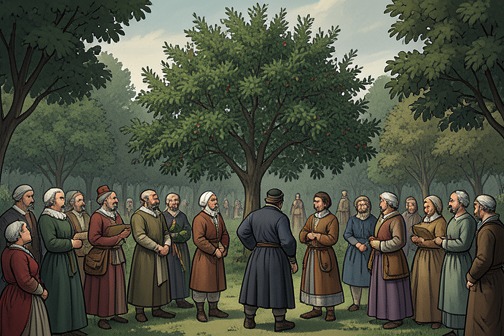
The garden filled with familiar rulers, companions, and heroes from [Narnia](entity:location-recall-location-narnia-396f2630d802)’s history: [Rilian](entity:character-recall-character-rilian-55a8f5aa7e07), [Caspian](entity:character-recall-character-caspian-835031e74cfb), [Puddleglum](entity:character-recall-character-puddleglum-f09a249d5ebd), [Tumnus](entity:character-recall-character-tumnus-1fe2fde3e992), [the Beavers](entity:character-recall-character-the-beavers-82916e923d90), and many others. [Tirian](entity:character-recall-character-tirian-541e581d89f0) encountered the old kings and friends whose stories had shaped his own understanding of Narnia.
At the orchard’s center, the company honored [King Frank](entity:character-recall-character-king-frank-a201fb1de6e9) and [Queen Helen](entity:character-recall-character-queen-helen-727f98d3f412) as ancestors of Narnia’s ancient royal lines. The gathering made the new country a place where Narnia’s separated ages could meet again.
later in the garden
The Garden Contains a World
[Lucy](entity:character-recall-character-lucy-680a57cd8fba) looked over the garden wall and realized that the place was far larger inside than its outer appearance suggested. [Tumnus](entity:character-recall-character-tumnus-1fe2fde3e992) explained that each deeper circle grew larger, like an onion whose inner layers expanded rather than diminished.
Lucy recognized within the garden a whole Narnian world of rivers, woods, seas, and mountains. What they had entered was not merely a refuge but another deeper country, more real and beautiful than the world beyond the stable door.
during Lucy’s view from the garden wall
The Real England Appears
[Lucy](entity:character-recall-character-lucy-680a57cd8fba)’s sight reached beyond the Narnian landscape to [England](entity:location-recall-location-england-b153c1f368ea) and the old country house where the Pevensies’ adventures had begun. [Tumnus](entity:character-recall-character-tumnus-1fe2fde3e992) explained that this was the England within England, the real country whose good things were not destroyed.
[Peter](entity:character-recall-character-peter-22e18a2305ec), [Edmund](entity:character-recall-character-edmund-65943bc9e68f), and Lucy then saw their parents across a deep valley and waved to them. The discovery connected their home in England to the same inward reality they had found in [Narnia](entity:location-recall-location-narnia-396f2630d802).
during the ascent toward the inner countries
Aslan Calls Puzzle Forward
A great procession began moving along the mountain ridges, drawn toward a light that grew stronger. [Aslan](entity:character-recall-character-aslan-f00e3dfd5571) came leaping down the cliffs, and the first person he called forward was [Puzzle](entity:character-recall-character-puzzle-5bdbd79cbc2a).
The donkey approached looking small and uncertain. Aslan whispered to him privately; Puzzle’s ears drooped and then lifted, leaving the humans unable to hear what had passed between them.
near the end of the story
The Railway Accident Revealed
[Lucy](entity:character-recall-character-lucy-680a57cd8fba) confessed that the company feared being sent back to its own world, since [Aslan](entity:character-recall-character-aslan-f00e3dfd5571) had returned them there before. Aslan told them there was no danger of that: they were dead in the world they called the Shadow-Lands, and the term had ended.
[The railway accident](entity:action-recall-action-the-railway-accident-944705d3f22d) had taken the lives of their parents and all the [Friends of Narnia](entity:organization-recall-organization-friends-of-narni-3e01d4545219) who had been aboard the train. Aslan described their new existence as morning after a dream, ending the fear that the company would be separated and sent away again.
the ending
The Great Story Begins
[Aslan](entity:character-recall-character-aslan-f00e3dfd5571)’s appearance changed beyond the company’s ability to describe, and the survivors entered a joy greater than the story could recount. The adventures in [Narnia](entity:location-recall-location-narnia-396f2630d802) and the life they had known in their own world were revealed as only the cover and title page of a larger story.
The final assurance is not that their lives have ended, but that their true life has begun. Its chapters continue forever, each better than the one before.